Ajay Patel
What a website performance audit includes, and what you get from one
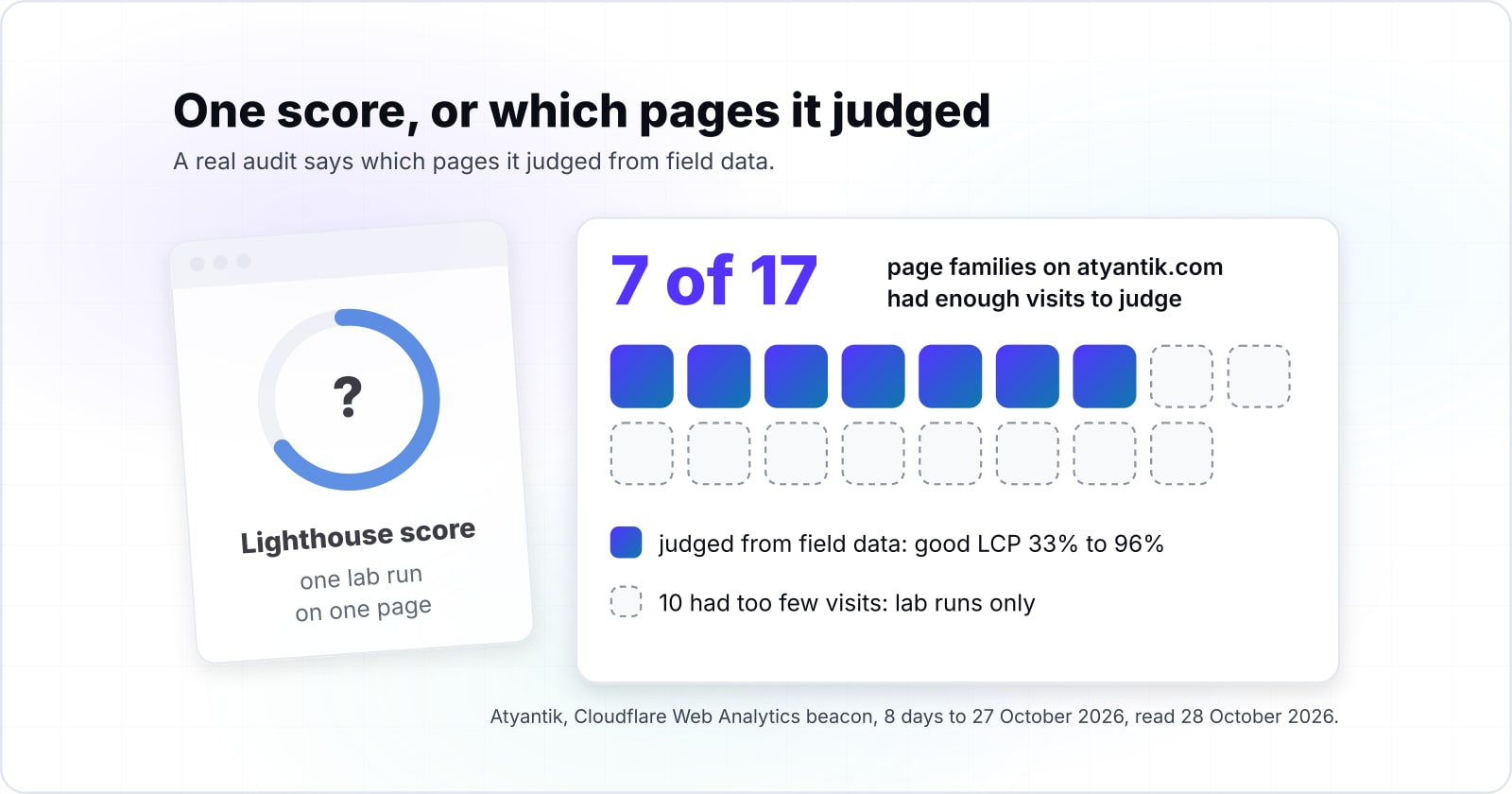
A website performance audit should hand you field data, repeated lab runs on every template, the cause of each failure and a ranked list of fixes.
Read the postTrace the milliseconds after you press enter, down to why cache beats RAM.
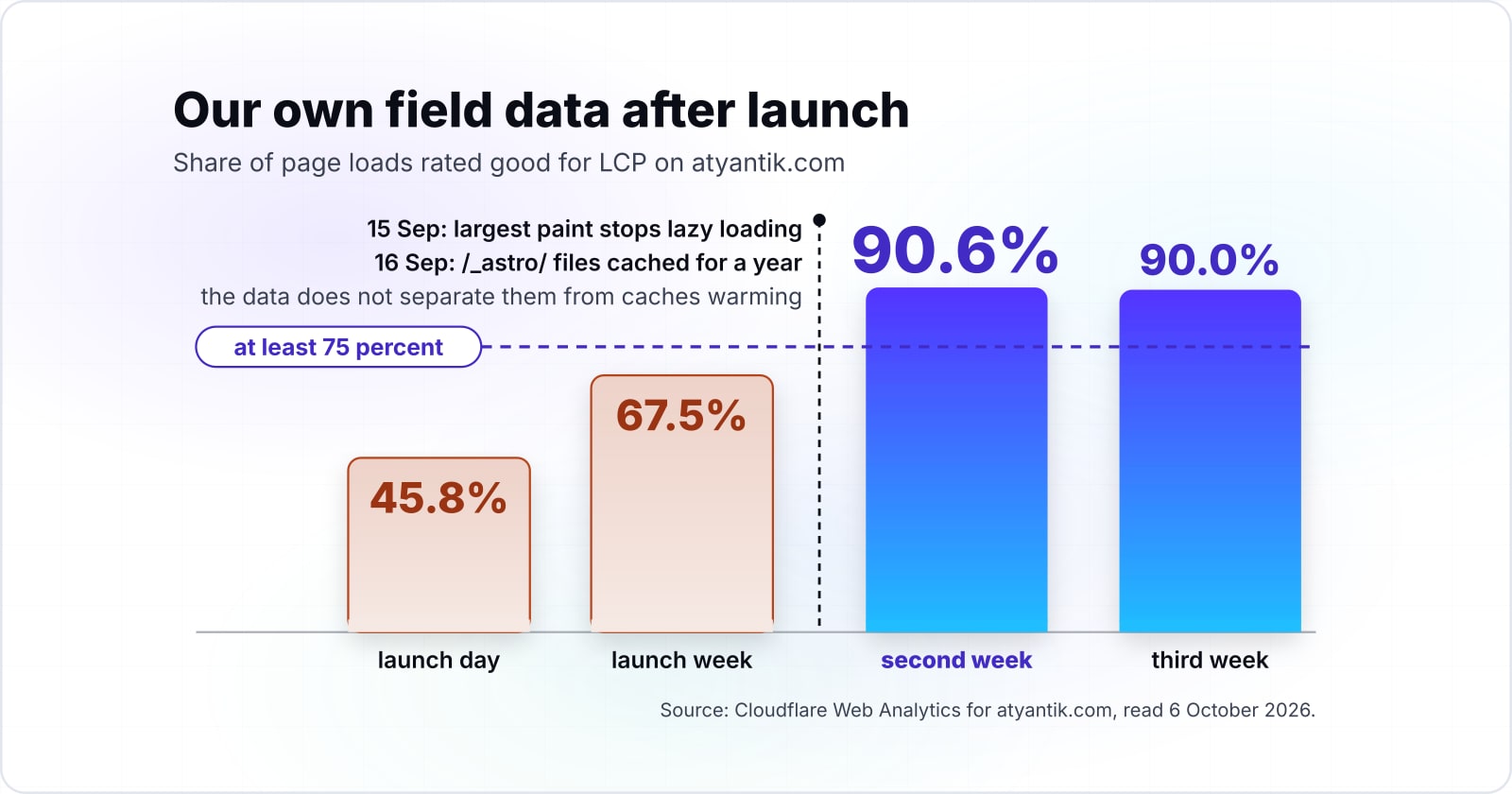
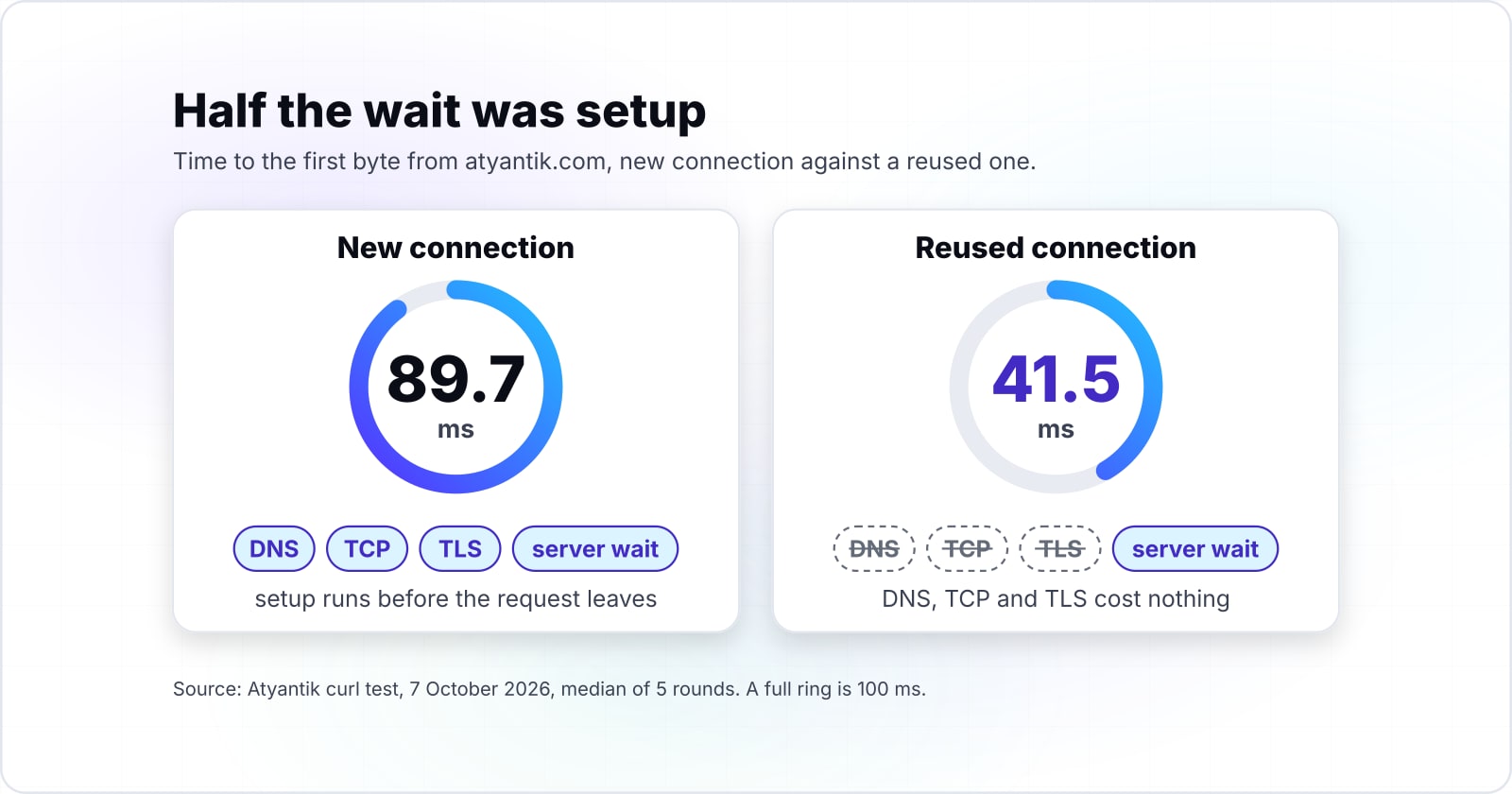
Web performance articles from Atyantik that start with the machine, not the metric. We trace what happens in the milliseconds after you press enter through DNS, TCP, TLS, and the render path, explain why CPU cache beats RAM down at the SRAM versus DRAM cell, and read Core Web Vitals from field data at p75 before pulling a fix. The Lighthouse post opens up its scoring model so the number stops being a mystery.
Ajay Patel
A website performance audit should hand you field data, repeated lab runs on every template, the cause of each failure and a ranked list of fixes.
Read the postIshan Chavda
What are Web Vitals? LCP, INP and CLS defined with Google's thresholds, the 75th percentile rule, lab versus field data and one site's real numbers.
Read the postMargi Varmora
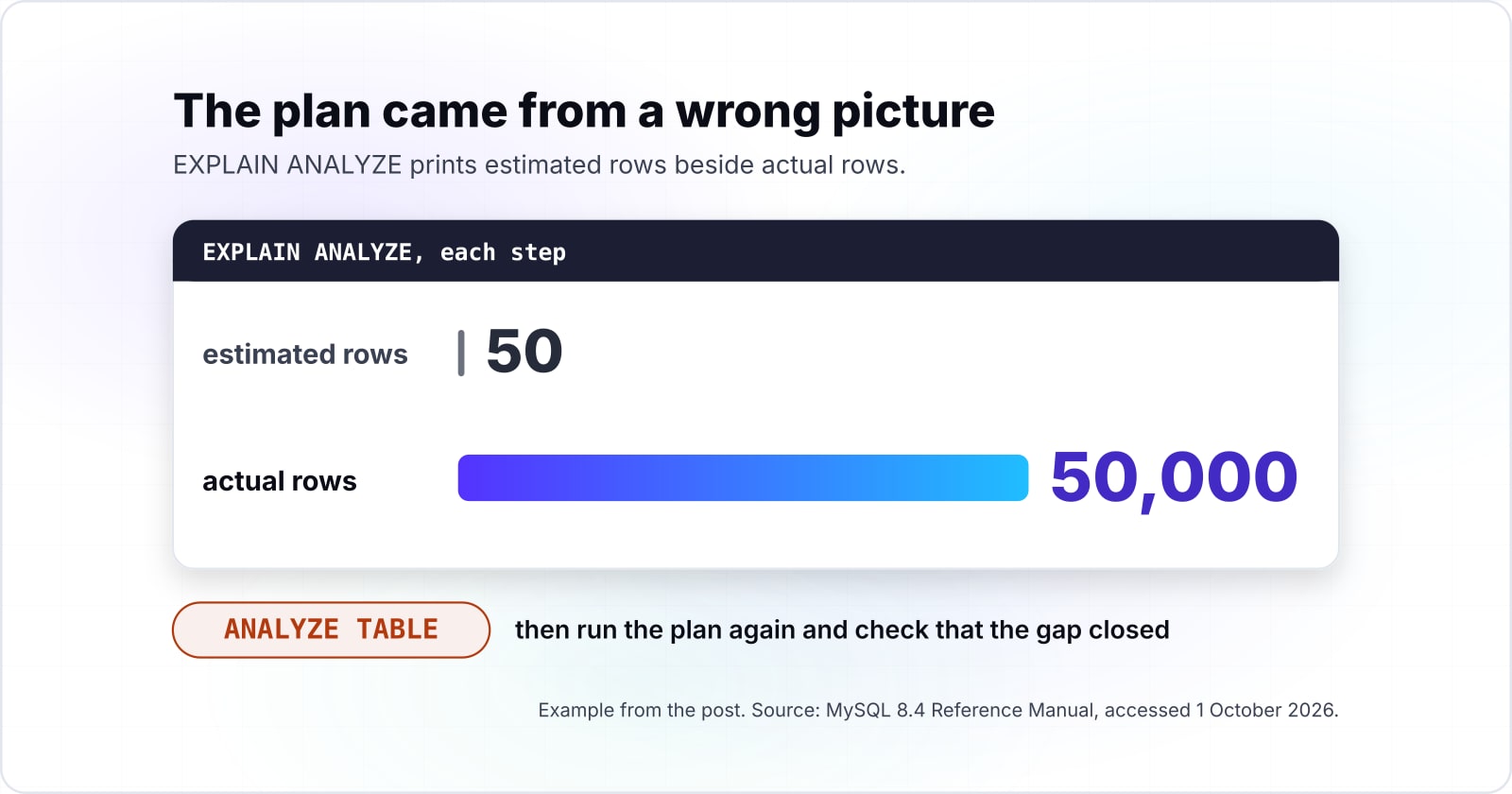
Fix MySQL performance bottlenecks and slow MySQL queries in triage order: the slow query log, total time, EXPLAIN ANALYZE, an index, then memory.
Read the postRonak Makwana
What happens when you hit a URL and press enter: each step from DNS to render, timed with curl on five real sites, plus the parts of a URL and its limits.
Read the postMaulik Macwan
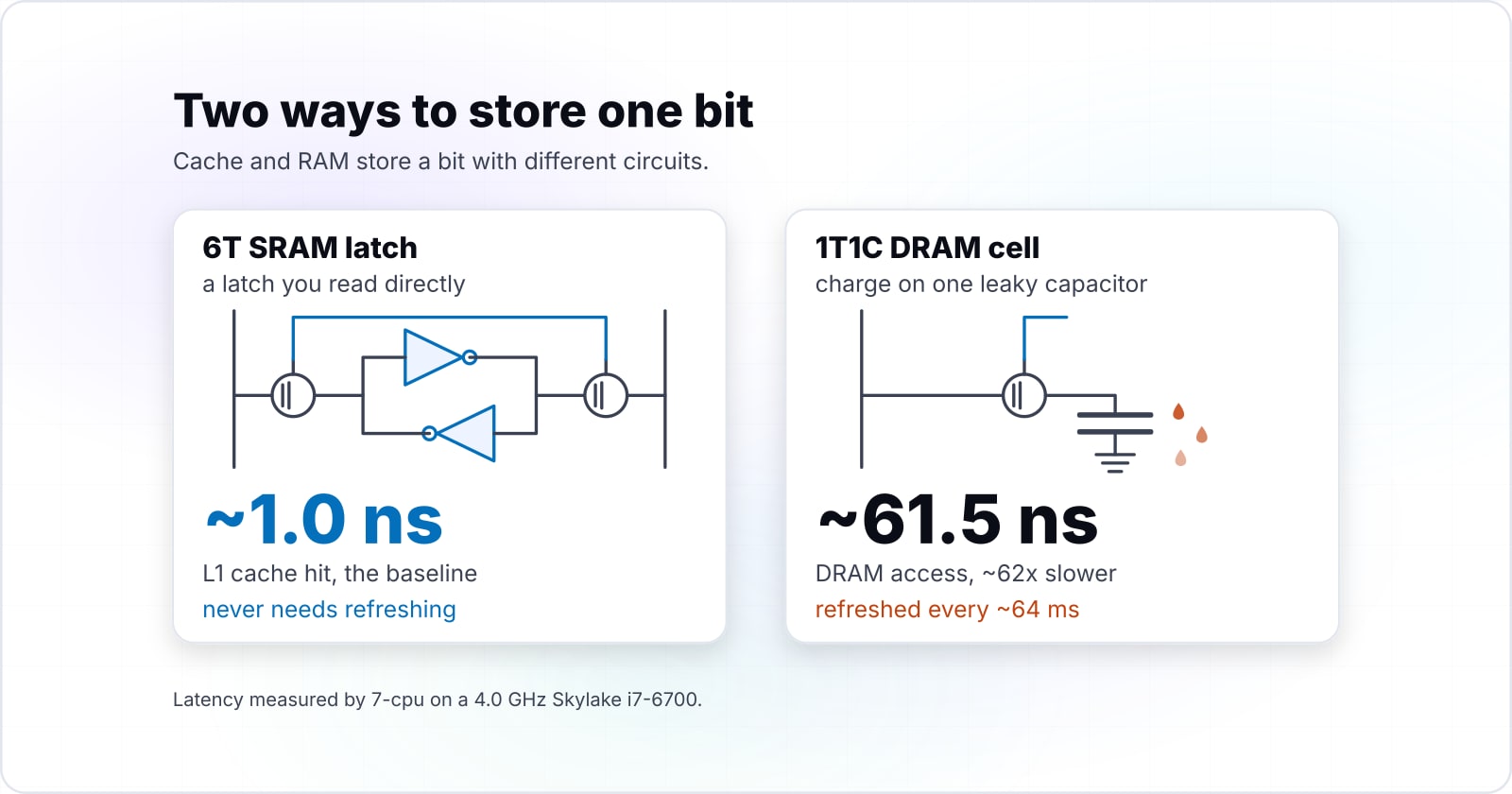
What is a CPU cache, and why is it faster than RAM? The SRAM vs DRAM cell, refresh timing, on-die distance, and a benchmark that plots each cache level.
Read the postIshan Chavda
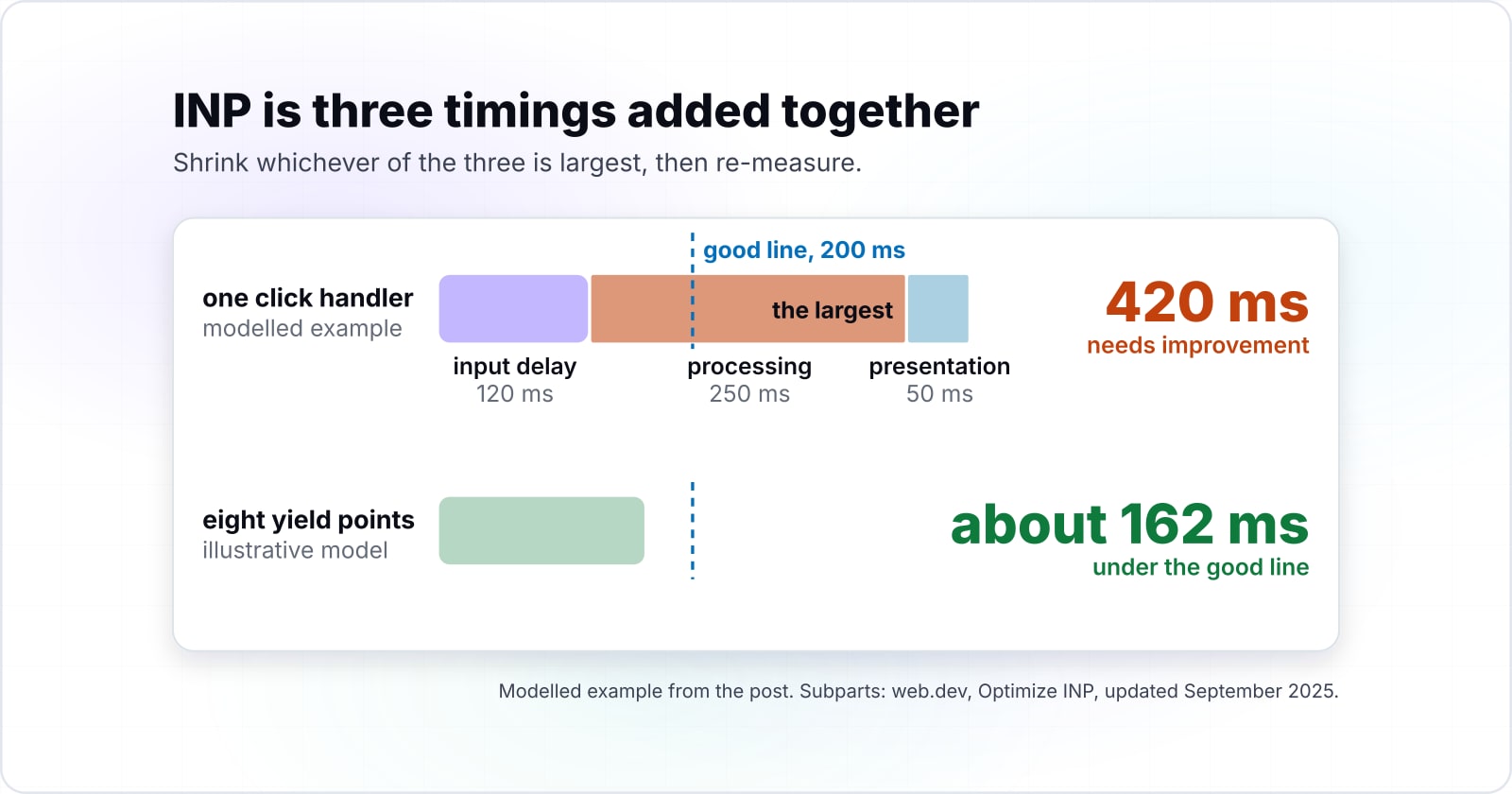
Site speed optimization 2026 as a field guide: read Core Web Vitals at p75, split LCP and INP into subparts, fix the one that owns the time, re-measure.
Read the postJuzer Dhoon
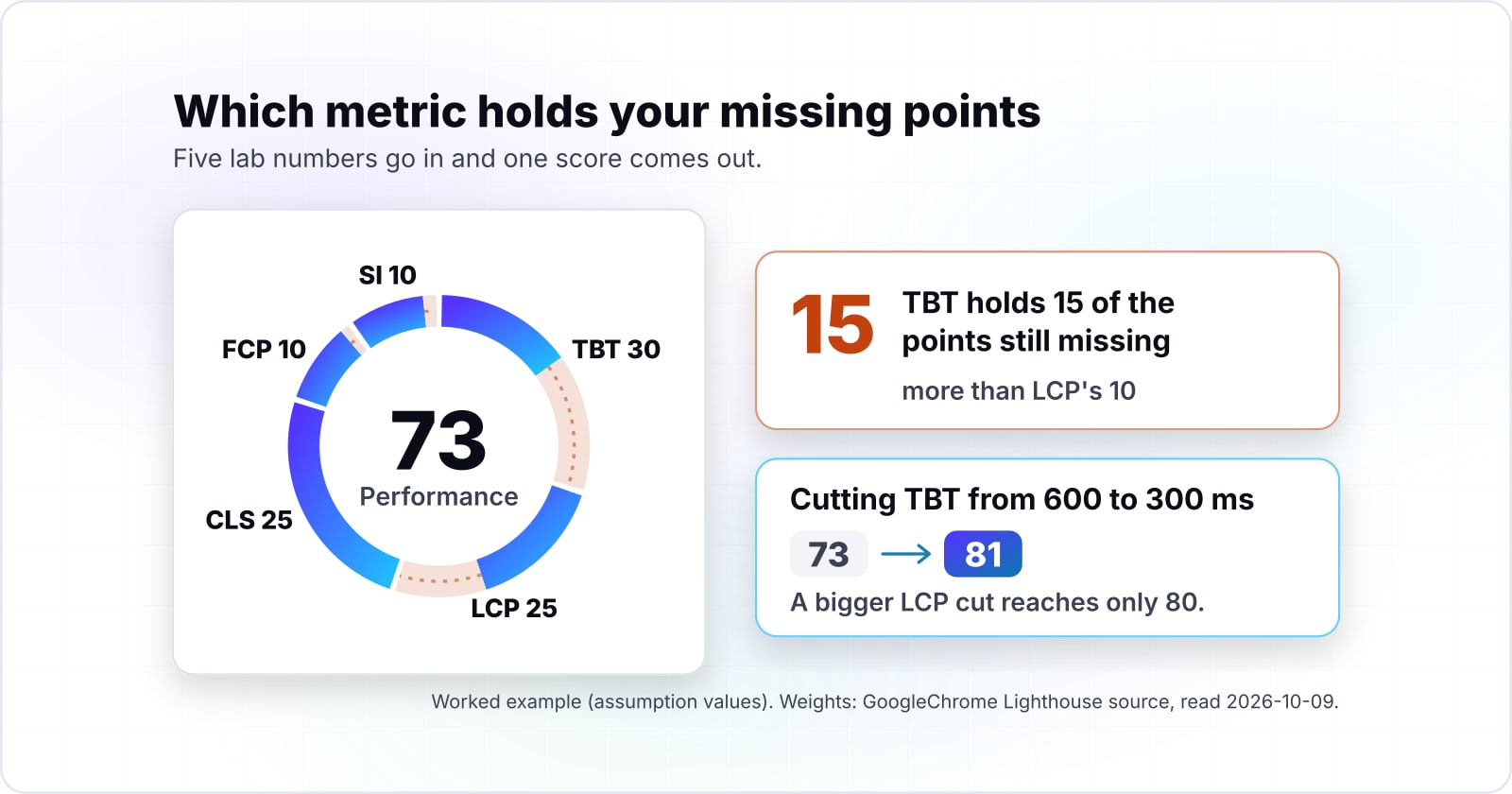
How the Lighthouse performance score is calculated: the five metric weights, the log-normal curves, a worked example and a CI gate on five runs.
Read the postAjay Patel
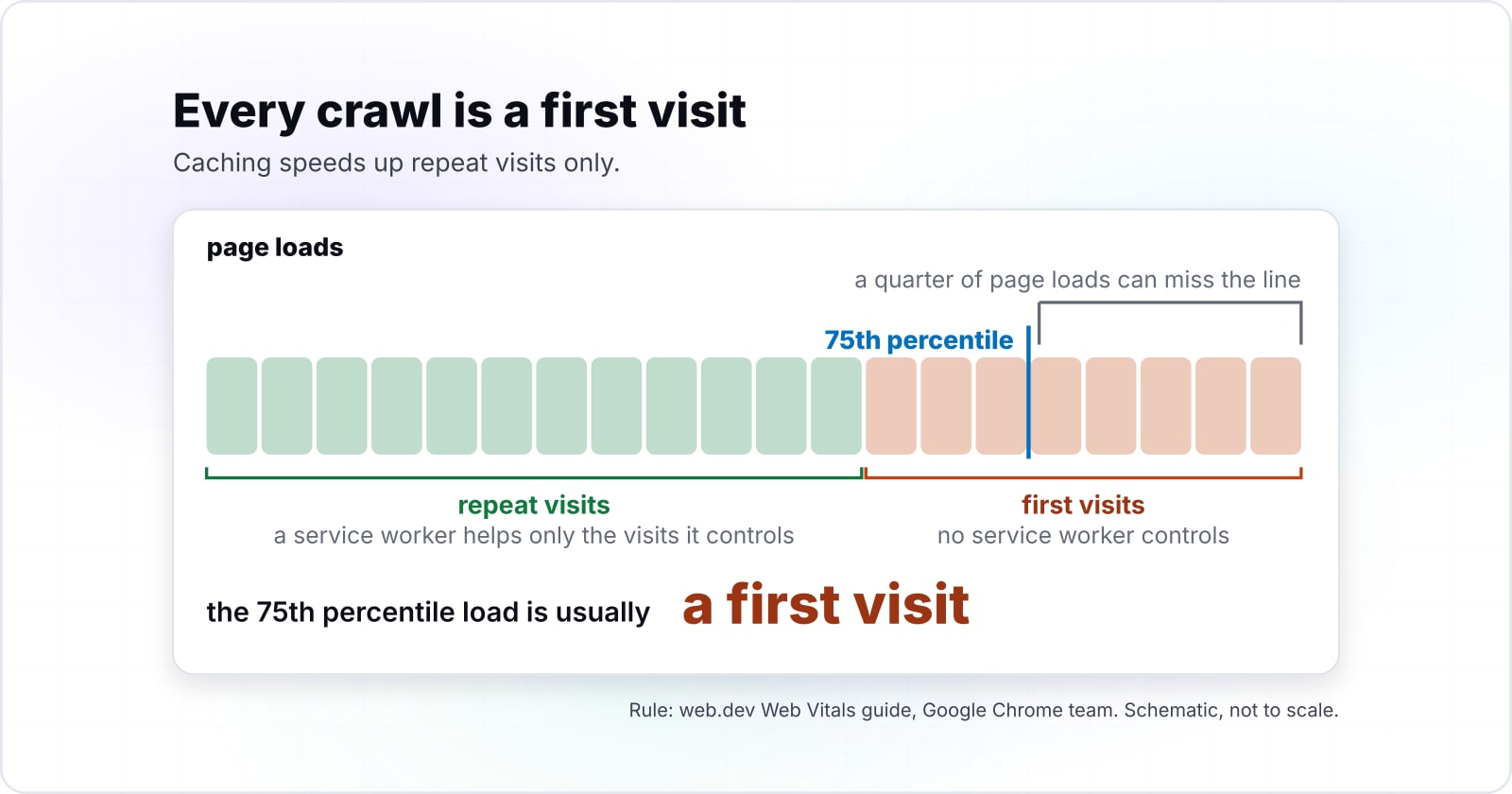
PWA SEO impact explained: Googlebot never runs your service worker, so the risks sit in server HTML, status codes, routes, links and Core Web Vitals.
Read the post