How testers and developers can close the gap and collaborate effectively
In software development, testers and developers work toward the same goal of delivering high-quality software. Yet their approaches often cause friction. Developers focus on building features quickly. Testers prioritize catching issues before they reach users. When these two groups work separately, the result is wasted effort, missed defects, and delayed releases. Collaboration between testers and developers can change this. It streamlines processes, improves product quality, and creates a more productive work environment. When developers and testers understand each other's challenges, they work as one unified team instead of two separate entities.
Why collaboration between testers and developers matters#
Reduce misunderstandings and miscommunications#
When testers and developers collaborate from the start, they align on project goals, requirements, and expectations. Both teams gain a clearer understanding of each other's priorities. This reduces the chances of miscommunication and closes gaps in the development process that could otherwise go unnoticed.
Identify defects earlier in the development cycle#
With continuous collaboration, testers can provide immediate feedback while developers are building features. This lets teams catch bugs, inconsistencies, or design issues early. Fixing issues early prevents them from escalating into more complex and costly problems later.
Increase efficiency and speed of releases#
Collaboration streamlines the development process. Testers validate features in real-time while developers implement fixes quickly. This reduces bottlenecks, accelerates the feedback loop, and leads to faster, more consistent release cycles.
Foster a culture of shared responsibility#
When both teams take ownership of quality, it promotes mutual responsibility. Developers invest in writing clean, testable code. Testers ensure the product functions as intended. This shared responsibility strengthens teamwork and raises the standard of software quality overall.
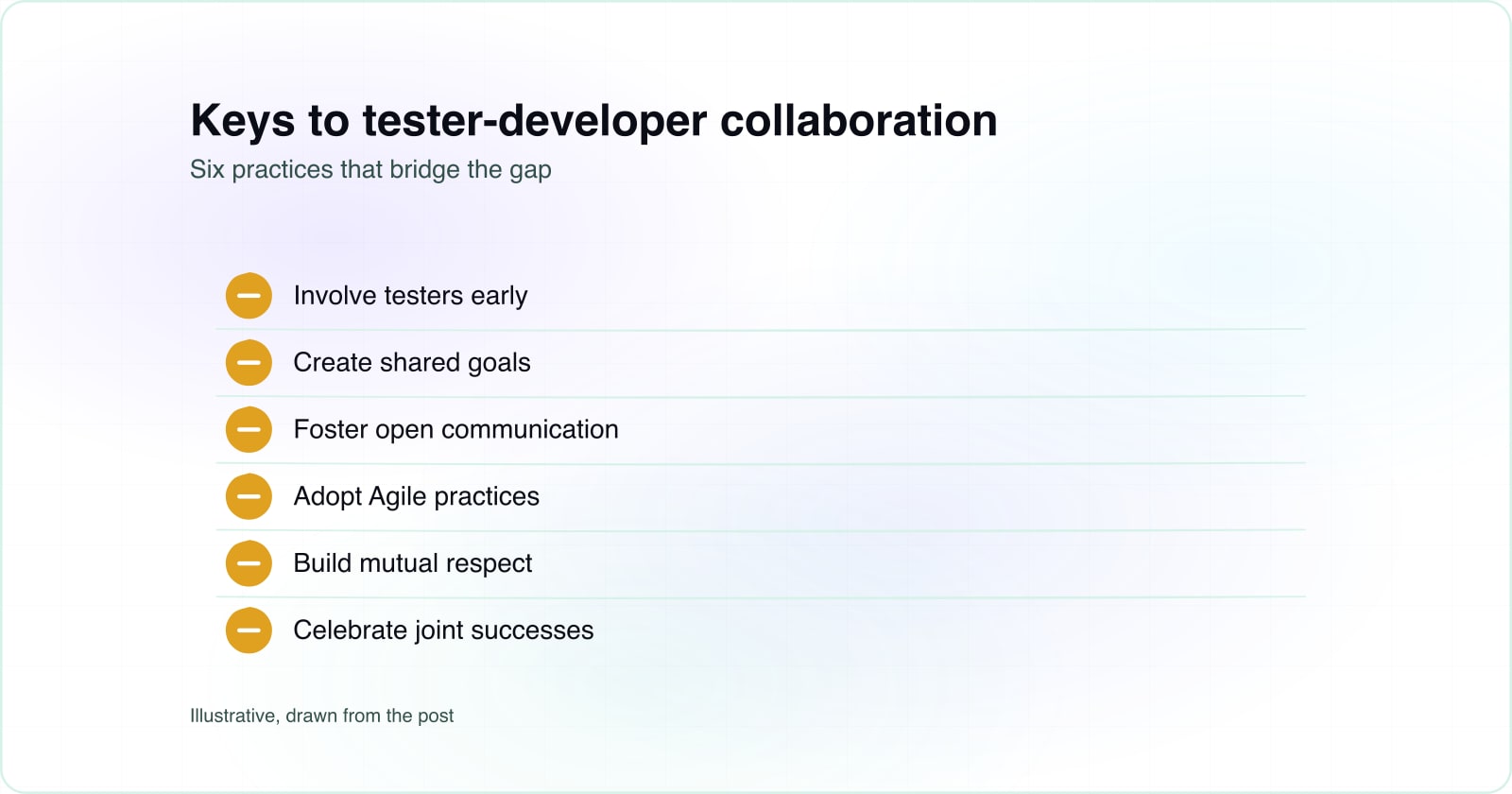
Strategies for effective collaboration#
Encourage early involvement of testers#
Involve testers from the very beginning of the project. Include them in planning, requirements gathering, and design discussions. By understanding the project's goals upfront, testers can identify potential risks, clarify requirements, and provide input on testability. This leads to more relevant test cases and better quality software.
Create shared goals and metrics#
Establish clear, shared goals for both developers and testers. Both teams can focus on reducing production defects, improving test coverage, or shortening release cycles. Define success metrics such as defect detection rates and code quality goals. This ensures everyone works toward the same outcome and fosters shared responsibility.
Foster open communication channels#
Create open communication channels for regular interactions. Use daily standups, collaborative chat channels, or bi-weekly retrospectives where teams discuss challenges and opportunities for improvement. Regular feedback sessions help prevent misunderstandings and enable continuous improvement.
Adopt Agile methodologies#
Agile practices like Scrum and Kanban foster continuous communication throughout the development cycle. Testers and developers work together in each sprint, delivering incremental improvements and feedback. Both teams attend daily standups, sprint planning, and retrospectives, ensuring alignment and quick problem-solving.
Create a culture of mutual respect and trust#
Both developers and testers must respect each other's roles and expertise. Developers should understand the value testers bring in identifying potential issues. Testers should recognize the challenges developers face under deadlines. Encouraging empathy and mutual trust creates a positive environment where both teams work together effectively. This foundation strengthens your approach to building software by making every team member accountable for quality.
Celebrate joint successes#
Acknowledge and celebrate achievements when the team meets project goals or delivers quality software. Celebrating joint successes promotes a sense of shared accomplishment and motivates both teams to continue working together effectively.
In closing#
Developers build. Testers break. But this dynamic, when embraced, creates something powerful. The best software is not built alone. When testers and developers unite, the result is not just fewer bugs. It's stronger teamwork, smoother releases, and software that truly shines. Understanding the psychology of bugs helps both teams see defects as shared learning opportunities rather than blame. So whether you write code or break it, remember: the partnership between testing and development is where quality lives. For organizations ready to scale their testing discipline, investing in continuous delivery and automated testing strengthens this collaboration at every level.