Structured Project Processes: How They Improve Delivery Quality
Structured project processes play a critical role in delivering high-quality project outcomes. Successful projects do not rely on effort alone. Instead, they depend on clear workflows, defined responsibilities and disciplined execution.
Why Project Quality Depends on Process Structure#
In today's project environments, teams often manage multiple stakeholders, tight timelines and changing requirements, which decide whether a plan-driven method or Scrum can work. Well-defined processes help teams reduce uncertainty, improve coordination and deliver consistent results.
A structured approach creates clarity by defining:
- Roles and responsibilities
- Project stages and milestones
- Review and approval checkpoints
- Documentation and reporting standards
Teams spend less time resolving confusion and more time focusing on delivery. This clarity eliminates gaps and overlaps in work.
What Are Structured Project Processes?#
Structured project processes are standardized frameworks used to manage projects throughout their lifecycle. These frameworks create a repeatable approach while still allowing flexibility when project needs evolve.
Typically, structured processes include:
- Clearly defined workflows
- Standard documentation templates
- Regular review and approval cycles
- Progress tracking and reporting mechanisms
Teams can maintain consistency and quality across projects. Outcomes no longer depend solely on individual experience or project-specific workarounds.
How Process Structure Improves Project Quality#
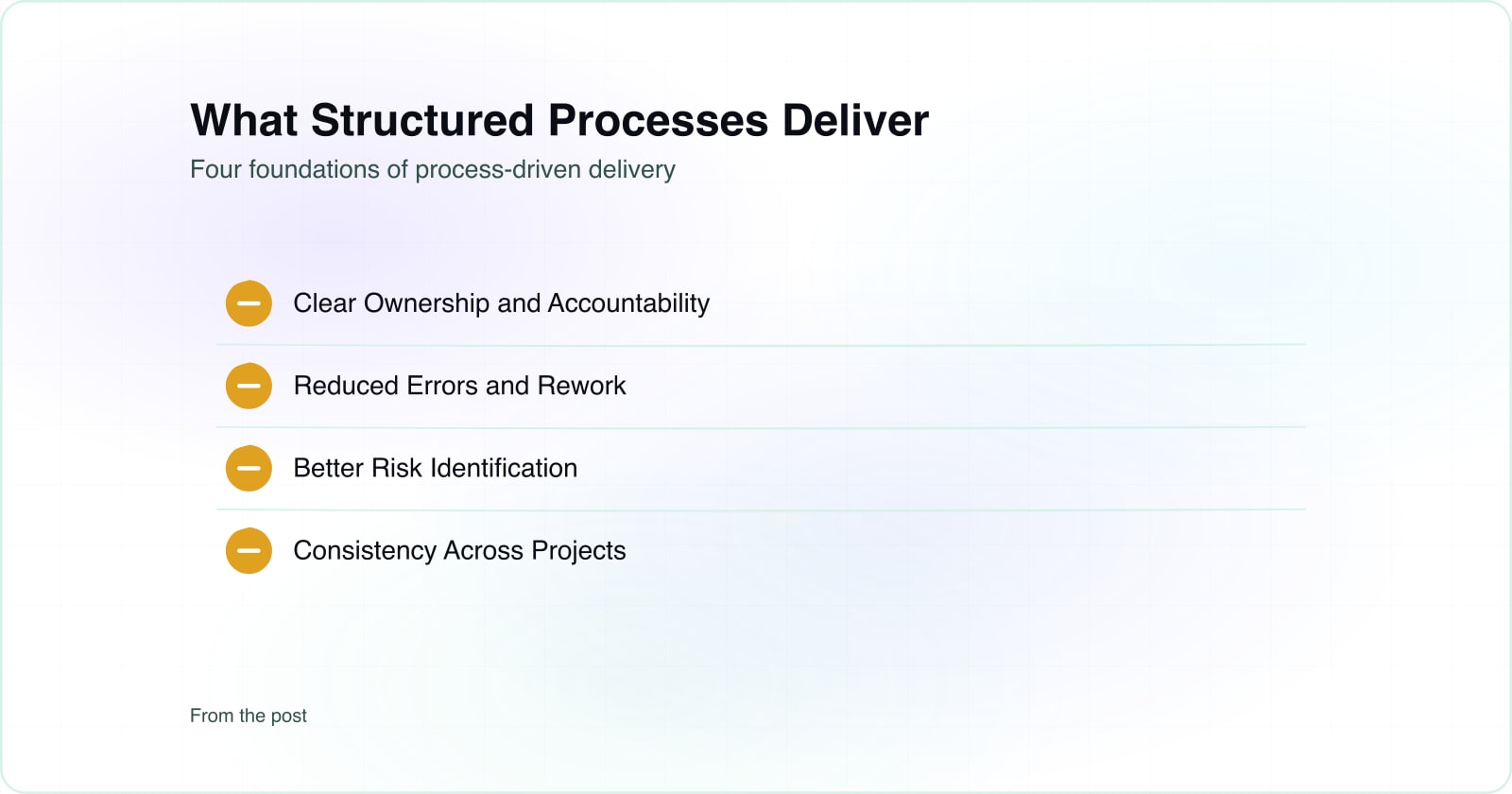
Clear Ownership and Accountability#
When teams follow structured processes, responsibilities remain clearly defined. Team members understand expectations and avoid gaps or overlaps in work. Accountability becomes a natural outcome of process clarity.
Reduced Errors and Rework#
Structured reviews and validation steps allow teams to identify issues early. Teams resolve problems before they turn into costly rework. Detection during execution costs far less than correction after handoff.
Better Risk Identification#
Regular checkpoints help teams detect potential risks in advance. Teams can take corrective action before risks affect delivery or quality. Early identification prevents compounding problems downstream.
Consistency Across Projects#
Standardized workflows ensure outcomes do not depend solely on individual experience. Teams achieve predictable and repeatable results. New team members adopt established practices faster.
Role of Coordination in Process Effectiveness#
Project coordinators play a key role in ensuring teams follow defined processes. They track progress, manage documentation and support timely reviews and approvals.
Structured processes move beyond guidelines and become part of daily execution. This involvement transforms documented standards into lived practice. Teams that invest in process maturity opens up the speed and quality that informed product discovery demands.
Balancing Structure and Flexibility#
Although structure supports quality, excessive rigidity can slow teams down. High-performing teams balance structure by:
- Maintaining core standards
- Allowing flexibility where needed
- Improving processes through regular feedback
Teams remain adaptable without compromising quality. Process discipline and agility work together rather than against each other.
Conclusion#
Structured project processes provide a strong foundation for high-quality project delivery. Process-driven execution enables teams to work efficiently and deliver reliable outcomes. Organizations that invest in strong processes create environments where quality becomes a natural result of execution. Leaders who need to build technical capability should read how CTOs approach process discipline to scale teams.
Teams can further strengthen delivery practices by following established project management best practices from trusted sources such as the Project Management Institute. Proven frameworks exist to accelerate your implementation.