Overcome project delivery challenges with practical strategies
Project delivery challenges are common across industries and project types. Regardless of scope or complexity, teams often face obstacles that affect timelines, quality, and stakeholder satisfaction. If left unaddressed, these challenges can lead to delays, rework, and reduced confidence in delivery outcomes.
However, by understanding common project delivery challenges and applying practical solutions, teams can significantly improve predictability and performance. This article outlines the most frequent issues faced during project execution and explains how to overcome them effectively.
Lack of Clear Requirements#
One of the most common project delivery challenges is unclear or incomplete requirements, the precondition every methodology tests first. When expectations are poorly defined, teams often rely on assumptions, which increases the risk of rework, delays, and scope confusion.
How to Overcome It#
To address unclear requirements, teams should:
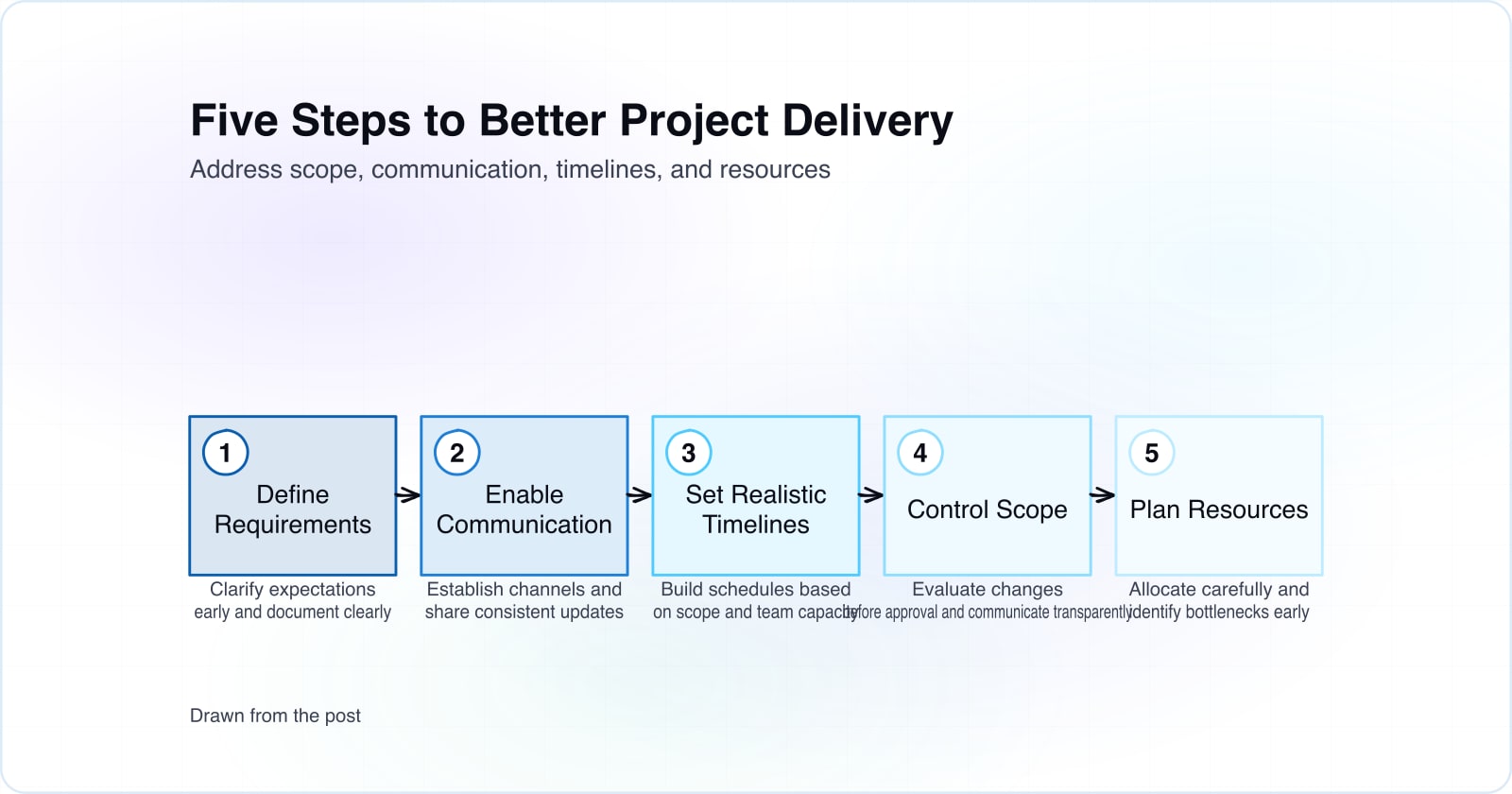
- Invest time in requirement clarification at the start of the project
- Document requirements clearly and validate them with stakeholders
- Review requirements regularly to manage changes effectively
As a result, teams can reduce ambiguity and align expectations early.
Ineffective Communication#
Ineffective communication frequently leads to misunderstandings, missed updates, and misaligned priorities. This challenge becomes more pronounced in projects involving cross-functional teams or multiple stakeholders.
How to Overcome It#
To improve communication during project delivery:
- Establish clear communication channels and protocols
- Share consistent updates on progress, risks, and changes
- Encourage open communication and feedback across teams
By doing so, teams can maintain alignment and avoid unnecessary surprises.
Unrealistic Timelines and Expectations#
Projects often struggle when timelines are overly aggressive or expectations do not match available resources. Consequently, teams may feel pressured, leading to reduced quality and burnout.
How to Overcome It#
To manage timelines more effectively:
- Create realistic schedules based on scope and team capacity
- Set clear expectations with stakeholders from the outset
- Track progress regularly and adjust plans when needed
This approach helps teams balance speed with quality.
Scope Creep#
Scope creep occurs when changes are introduced without proper evaluation or approval. Over time, uncontrolled scope changes can disrupt delivery plans and compromise quality.
How to Overcome It#
To control scope effectively:
- Define and document the project scope clearly
- Evaluate the impact of change requests before approval
- Communicate scope changes transparently to all stakeholders
As a result, teams can manage change without losing control of delivery.
Resource Constraints#
Limited access to skilled resources can slow progress and place additional pressure on team members. If not addressed early, resource constraints can affect both timelines and morale.
How to Overcome It#
To manage resource limitations:
- Plan resource allocation carefully during project initiation
- Identify potential bottlenecks early in the project lifecycle
- Prioritize tasks based on impact and urgency
This enables teams to focus efforts where they matter most.
Moving Forward#
Project delivery challenges are inevitable, but they do not have to result in failure. By identifying common issues early and applying structured approaches to address them, teams can improve predictability, reduce risks, and deliver better outcomes.
Ultimately, proactive planning, clear communication, and adaptability remain essential for overcoming project delivery challenges and achieving successful results. Learn more about building effective delivery practices at how we approach project delivery or explore how we structure successful engagements.