How QA ensures fast releases don't become frustrated releases
In modern software development, speed is the new currency. Continuous integration, agile sprints, and rapid deployments have made fast releases the norm. But where does QA fit? Far from being sidelined, testers bring unique insights that ensure speed doesn't sacrifice quality. Their ability to focus on what could go wrong makes them indispensable as teams race to ship.
The Tester's Mindset in Fast Releases#
Developers focus on building, users focus on using. Testers focus on what could go wrong. This mindset is what makes QA in fast releases critical. When timelines compress, this perspective becomes even more valuable.
- Anticipating edge cases: Beyond happy paths, testers explore unusual inputs, simultaneous actions, and real-world interruptions that developers might not envision.
- Thinking like a user (and beyond): They simulate scenarios users may never consciously think of, like losing connectivity mid-transaction or using features in unexpected sequences.
- Spotting subtle inconsistencies: A tester's eye for detail ensures that even small UI/UX flaws don't erode trust or create friction.
Attention to Detail: The QA Superpower#
Fast releases often mean compressed timelines. Yet testers thrive on precision. Under pressure, this becomes their defining strength.
- Micro-observations: A slightly misaligned button or inconsistent error message may seem minor, but in fast releases these details matter.
- Traceability: Testers link requirements to test cases, ensuring nothing slips through in the rush.
- Documentation under pressure: Clear records of what was tested and fixed provide a safety net for future iterations.
Real-World Example#
Imagine a fintech app rolling out instant loan approvals. Developers celebrate speed, but testers notice:
- Missing interest rate details on the approval screen.
- Backend failures under simultaneous requests that unit tests never surfaced.
- Outdated branding in confirmation emails sent to users.
These observations highlight why QA in fast releases is essential. Not just for catching bugs, but for protecting compliance, user trust, and brand reputation.
Adapting QA in Fast Releases#
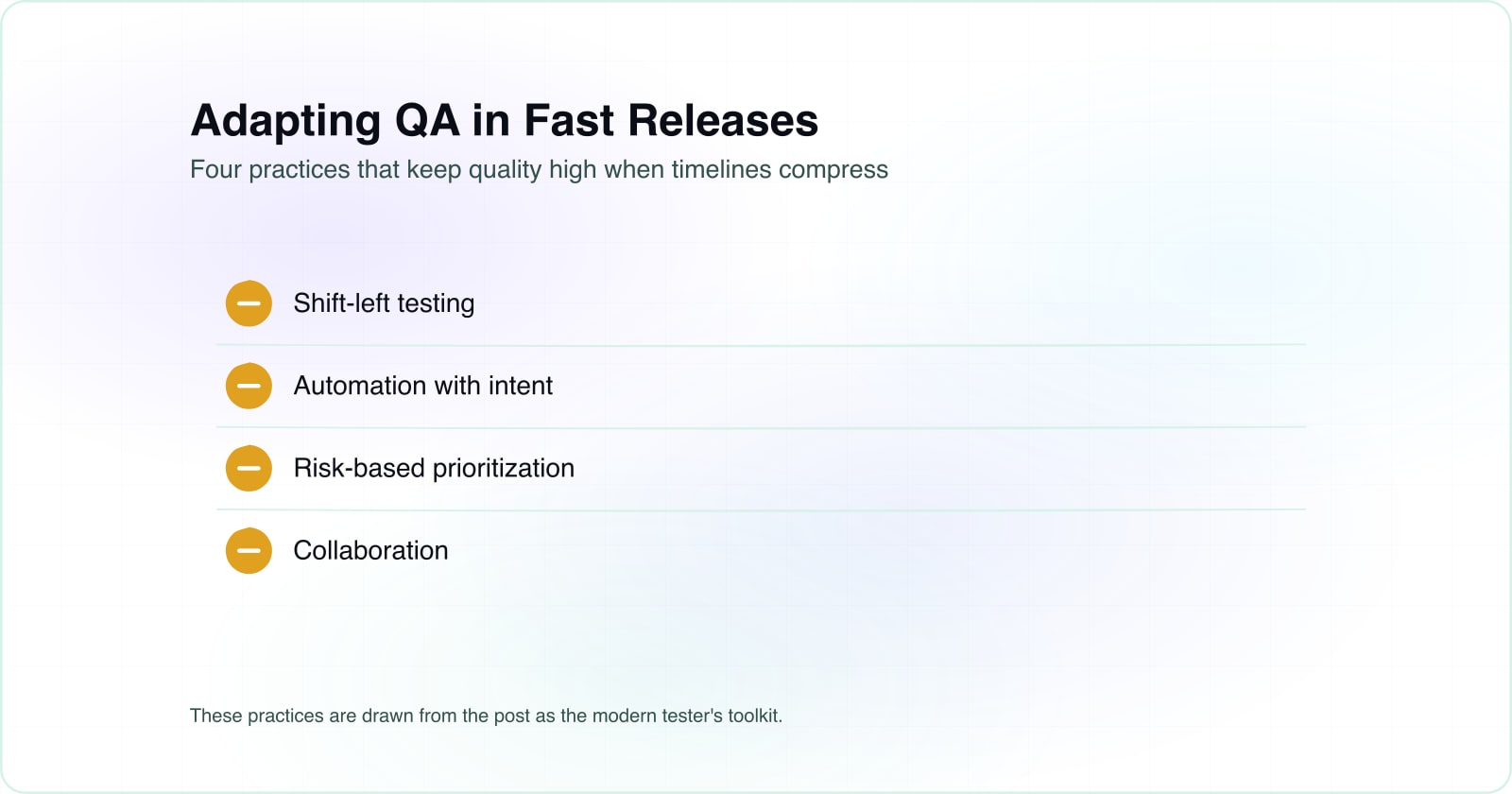
To stay relevant, testers evolve their approach. Traditional methods alone won't survive acceleration. Modern QA in fast releases means:
- Shift-left testing: Engaging early in requirements and design discussions, not waiting for builds.
- Automation with intent: Automating repetitive checks while reserving human intuition for exploratory testing where it adds the most value.
- Risk-based prioritization: Focusing effort on high-impact areas like security, payments, and data integrity rather than testing everything equally.
- Collaboration: Acting as communicators between developers, product managers, and users to surface risks early.
Why QA in Fast Releases Matters#
Fast releases deliver features quickly. Without QA, they risk delivering frustration just as fast. Testers ensure speed and quality coexist. Their ability to question assumptions, anticipate risks, and safeguard user experience makes them indispensable, no matter how tight the timeline.
Conclusion#
QA keeps rapid deployment from costing you user trust. Testers transform fast releases into successful releases. They remind teams that speed and quality aren't opposing forces. They're partners when QA stays at the table.
As your team accelerates, pair DevOps and CI/CD practices with strong testing discipline. When speed pressures increase, maintenance and support readiness becomes just as critical as delivery velocity. QA bridges that gap.